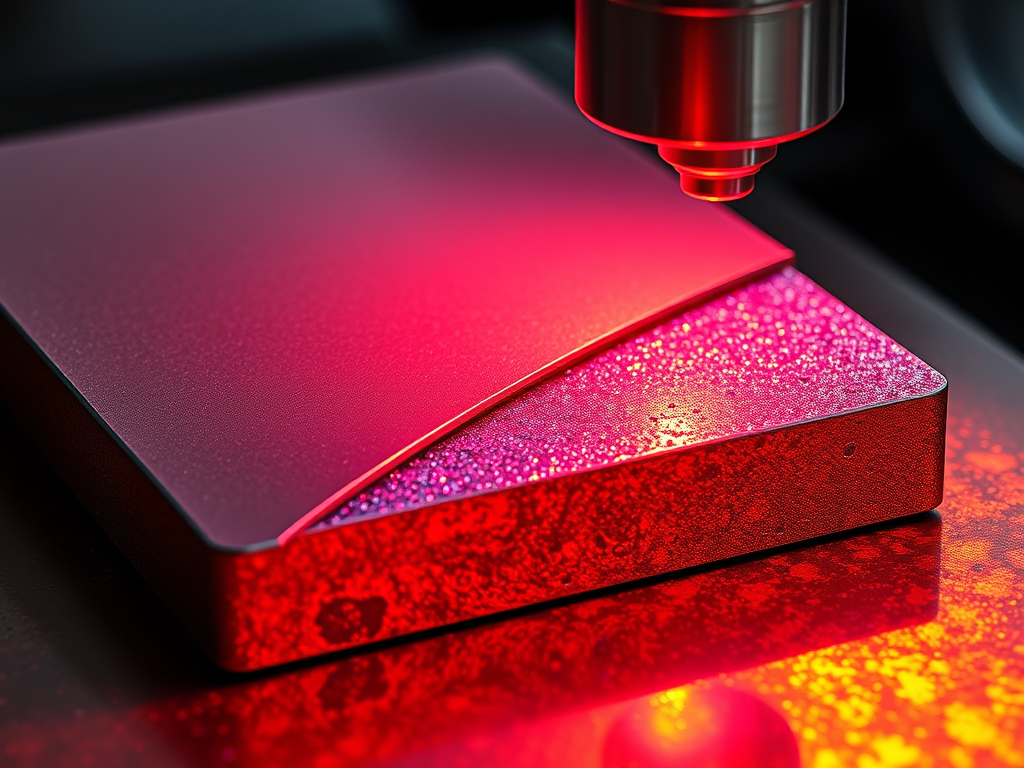
Unmatched Corrosion Resistance of Magnesium Alloys
Chapter 1: Introduction to Magnesium Alloys and Corrosion Challenges
Magnesium alloys are highly sought after for lightweight manufacturing due to their extremely low density and high specific strength. They are widely used in aerospace, automotive, 3C consumer electronics, and biodegradable implants. However, their primary drawback is extremely poor corrosion resistance. With a standard electrode potential, magnesium alloys are highly susceptible to galvanic corrosion and environmental degradation. Proper magnesium alloy surface treatment is absolutely critical to ensure structural integrity and product longevity.
Chapter 2: Traditional Chemical Conversion Coatings: Mechanisms and Flaws
Historically, chemical conversion coatings (such as chromate or phosphate) were the standard for protecting magnesium. However, they possess fatal flaws:
- Inherent Defects: These coatings rely on chemical deposition, which is easily disrupted by surface impurities. The resulting films are highly porous, prone to cracking, and fail to provide long-term protection.
- Poor Performance: In standard salt spray tests (ASTM B-117), non-chromate coatings fail within 24 to 48 hours, serving merely as a weak primer for organic paints.
- Environmental & Regulatory Bans: Hexavalent chromium ($\text{Cr}^{6+}$) coatings are highly toxic and carcinogenic. Global regulations like RoHS and REACH strictly prohibit their use, forcing industries to seek eco-friendly alternatives.

Chapter 3: Consequences of Improper Surface Treatment
Using inferior or improper surface treatments on magnesium alloys leads to catastrophic product failures:
- Galvanic & Pitting Corrosion: Moisture penetrates weak coatings, creating micro-galvanic cells between the magnesium matrix and internal alloying elements. This leads to rapid, localized pitting corrosion that destroys the metal’s structural integrity.
- Paint Blistering & Peeling: Corrosion produces hydrogen gas and expansive magnesium hydroxide. This exerts immense pressure from the inside out, causing organic topcoats to blister and peel off catastrophically.
- Hydrogen Embrittlement & Corrosion Fatigue: Hydrogen atoms penetrate the metal lattice, causing severe stress corrosion cracking (SCC) and a drastic drop in mechanical fatigue life.
Chapter 4: Why Micro-Arc Oxidation (MAO) is the Best Solution
Micro-Arc Oxidation (MAO), also known as Plasma Electrolytic Oxidation (PEO), has emerged as the ultimate surface treatment for magnesium alloys.
- In-Situ Ceramic Coating: Driven by high voltage, MAO creates micro-plasma discharges that melt the magnesium surface, forming an ultra-hard, dense, and highly crystalline ceramic oxide layer.
- Extreme Durability: MAO boosts surface hardness to $300 \sim 500\,\text{HV}$, offering exceptional wear resistance.
- Unmatched Corrosion Resistance: MAO coatings easily withstand over 1,000 hours of salt spray testing, effectively blocking moisture and chloride ions.
- Eco-Friendly: MAO uses safe, heavy-metal-free aqueous electrolytes, fully complying with modern REACH and RoHS green manufacturing standards.
Chapter 5: Industrial Applications of PEO Coatings
- Aerospace & Defense: PEO eliminates the need for heavy toxic primers, maximizing weight reduction while providing thermal stability up to $900^\circ\text{C}$. This allows magnesium parts to pass rigorous aviation flammability standards.
- Consumer Electronics: Premium laptops and smartphones utilize MAO-treated magnesium (like AZ91D) for ultra-lightweight, rigid, and heat-dissipating chassis that perfectly bond with cosmetic topcoats.
- Biomedical Implants: MAO precisely controls the degradation rate of biodegradable implants (like bone screws and cardiovascular stents). The resulting porous, hydrophilic ceramic surface promotes excellent bone integration and cellular growth without the need for secondary removal surgeries.
Chapter 6: Future Trends: Advanced Composite Coatings
To achieve near-zero corrosion in extreme environments, the future of magnesium alloy surface treatment lies in MAO composite coatings. By using advanced nanomaterials to seal the MAO micropores, engineers can create impenetrable barriers:
- Graphene Oxide (GO) Sealing: Fills pores and reduces electrical leakage by 5 orders of magnitude, achieving near-perfect insulation.
- Covalent Organic Frameworks (COF): Chemically bonds to the MAO surface, drastically increasing charge transfer resistance and lowering the corrosion current.
Chapter 7: Conclusion
For modern engineering, selecting the right surface treatment is non-negotiable. Traditional chemical conversion coatings are obsolete due to their fragile protection and severe environmental toxicity. Micro-Arc Oxidation (MAO) stands as the industry-leading technology, providing unmatched hardness, superior corrosion resistance, and total environmental compliance. Whether in aerospace, consumer electronics, or medical devices, MAO is the definitive solution to unlock the full potential of lightweight magnesium alloys.
