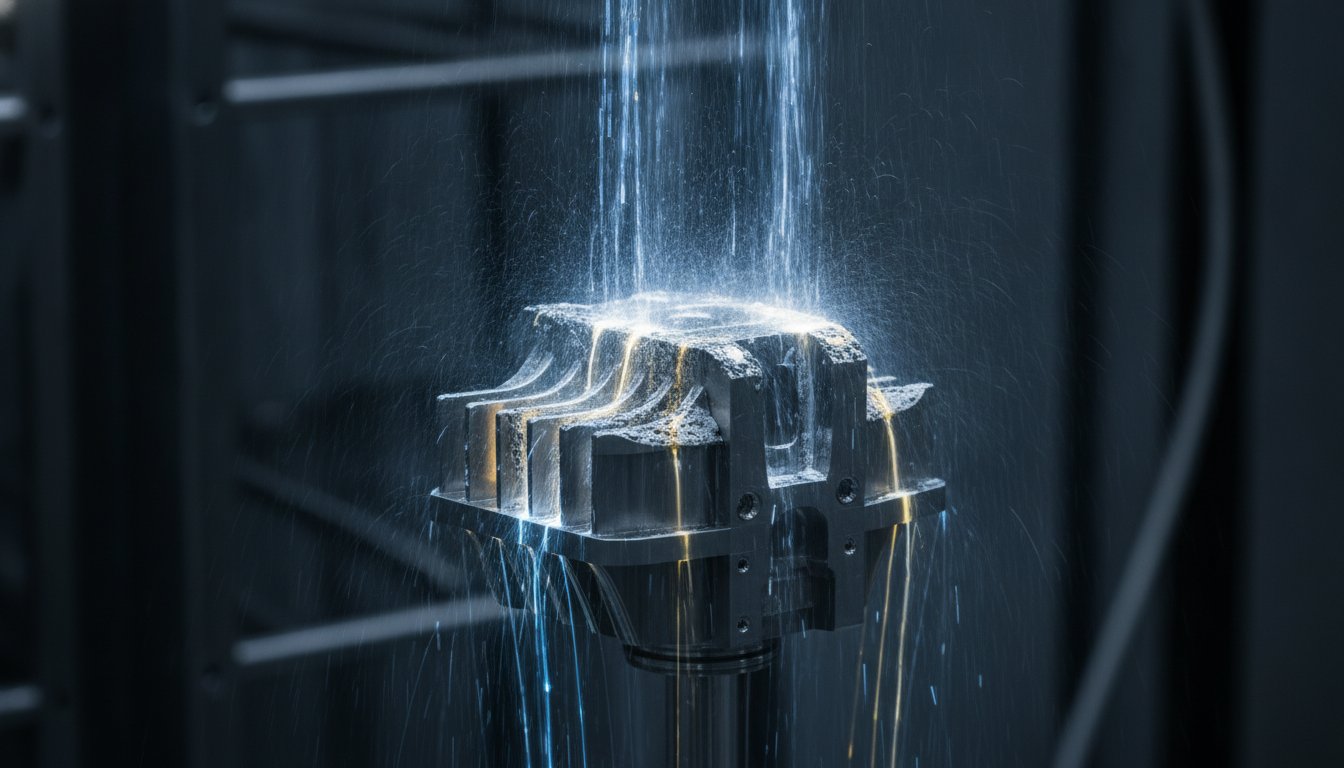
As high-precision industries push the limits of material science, the surface technology market is projected to reach nearly $100 million by 2035, fueled by the adoption of PEO surface engineering solutions over legacy coatings. You’ve likely seen traditional anodizing struggle when faced with the rigorous demands of vacuum environments or high-voltage components. Whether it’s the risk of particle shedding in semiconductor chambers or thermal management failures in lightweight aerospace alloys, the limitations of standard treatments are becoming a strategic bottleneck for industrial OEMs. These failures don’t just compromise parts; they threaten the reliability of entire systems.
This guide explores how Plasma Electrolytic Oxidation (PEO) provides a decisive advantage, offering a ceramic-like oxide layer that’s significantly harder and more durable than hard-anodized surfaces. You’ll discover how to identify a scalable surface treatment that improves component lifespan in the most extreme environments. We’ll examine the technical transition from Micro-Arc Oxidation (MAO) to next-generation applications and discuss how securing a strategic technology partner can future-proof your long-term R&D pipeline.
Key Takeaways
- Learn the technical distinction between traditional coating deposition and the spark-assisted growth of ceramic layers for superior substrate integration.
- Evaluate performance benchmarks for wear resistance and heat distribution to optimize thermal management in advanced CPO cooling applications.
- Identify industry-specific PEO surface engineering solutions tailored for semiconductor chamber coatings and aerospace-grade armor durability.
- Understand the strategic role of PEO Bipolar Power Units and technology licensing in scaling precision production for high-stakes components.
- Discover how a “Concept-to-Application” framework transitions your operation from a service-dependent model to an integrated R&D partnership.
Evaluating PEO Surface Engineering: A Strategic Shift from Traditional Anodizing
Industrial manufacturing is undergoing a fundamental shift from simple part protection to integrated material science. Traditional anodizing often acts as a mere barrier, but Plasma electrolytic oxidation (PEO) represents a higher tier of surface modification. Unlike conventional deposition methods that add a layer on top of a part, PEO is a high-voltage, spark-assisted electrochemical process that grows a ceramic layer directly from the metal substrate. This transition from passive protection to active surface engineering is essential for high-performance alloys like titanium, magnesium, and aluminum.
Modern industrial OEMs require precision that exceeds the capabilities of standard chemical baths. By utilizing advanced PEO surface engineering solutions, engineers can transform the physical properties of a component’s surface without compromising the integrity of the base alloy. This process is often driven by PEO Bipolar Power Units, which provide the controlled energy pulses necessary to manage the plasma discharge accurately. It’s a method that doesn’t just coat a part; it fundamentally re-engineers its exterior for the most demanding environments.
To better understand the transformative nature of this technology, watch this technical overview:
The Mechanism of Plasma Discharge
The process relies on microscopic plasma bolts that generate localized high temperatures at the metal-electrolyte interface. These discharges convert the surface of the metal into a crystalline ceramic structure. The resulting surface isn’t uniform; it’s a sophisticated multi-layered architecture. A dense, non-porous barrier layer forms at the substrate interface, providing unmatched adhesion, while a functional top layer can be tailored for specific industrial needs. By adjusting the electrolyte chemistry and electrical parameters, developers can fine-tune the coating’s hardness, thickness, and thermal resistance.
Why Traditional Methods Fail in Extreme Environments
Hard anodizing and thermal spray coatings often reach their breaking point in high-stakes applications. Standard anodized layers are inherently porous, making them susceptible to chemical infiltration and thermal shock. Thermal sprays, while thick, frequently suffer from poor adhesion and can delaminate under mechanical stress. PEO surface engineering solutions solve these issues by creating a metallurgical bond that is chemically fused to the part. This eliminates the risk of flaking and provides a “future-proof” foundation for components operating in the volatile conditions of semiconductor chambers or aerospace propulsion systems. For more technical deep dives into material science, you can explore the latest research on our surface engineering blog.
Performance Benchmarks: Why PEO Solutions Outperform in High-Stakes Environments
PEO surface engineering solutions deliver measurable advantages where traditional hard anodizing fails. In high-stakes environments, the technical delta between a standard coating and a precision-engineered ceramic layer determines the operational lifespan of the entire system. According to research on the PEO process and applications, these treatments provide a unique combination of mechanical hardness and chemical stability that is unmatched by conventional electrolytic processes. This isn’t just a surface-level improvement; it’s a fundamental change in how the component interacts with its environment.
Wear Resistance and Surface Hardness
The mechanical superiority of PEO is most evident in its Vickers hardness rating. While hard-anodized aluminum typically peaks around 400 to 600 HV, PEO-treated surfaces can reach levels between 1500 and 2000 HV, rivaling the hardness of many technical ceramics. This hardness directly translates to superior Taber Abrasion results, which is a critical metric for industrial OEMs. In high-cycle industrial automation, where robotic wear can lead to frequent maintenance downtime, PEO provides a resilient barrier that maintains its integrity under constant friction. The wear-coefficient of PEO is significantly lower than that of traditional chrome plating or hard anodizing, ensuring that precision components maintain their dimensional tolerances over millions of cycles.
Thermal Management and CPO Cooling
Managing heat in dense electronic architectures requires more than just passive dissipation. Our integrated CPO cooling solutions leverage the ability to “dope” the electrolyte during the PEO process. This allows engineers to toggle the layer’s properties between acting as a thermal barrier or a thermal conductor. For lidar optical systems and high-performance electronics, this level of precision is a strategic necessity. Unlike organic coatings that degrade under heat, PEO layers are entirely inorganic. This ensures zero outgassing in vacuum environments and high UV resistance for orbital or outdoor applications. It’s a robust solution for systems that cannot afford the risk of contamination or material degradation.
The dielectric strength of these ceramic layers is equally critical for modern hardware. For high-voltage electronic housings, PEO provides a reliable insulating barrier that prevents electrical breakdown even in thin-film applications. This combination of thermal control and dielectric integrity allows for more compact, efficient component designs without sacrificing safety. If you’re looking to optimize your next-gen hardware, you can partner with our engineering team to develop a customized PEO surface engineering solutions protocol that meets your specific performance benchmarks. This collaborative approach ensures that the final surface is precision-engineered for its specific industrial utility.
Industry-Specific Engineering: Tailoring PEO for Semiconductors, Aerospace, and Robotics
Generic surface treatments rarely suffice in sectors where a single micron of wear can lead to system-wide failure. While the performance benchmarks discussed previously establish the mechanical superiority of these layers, the true value of PEO surface engineering solutions lies in their adaptability. Industrial OEMs in high-precision fields require more than a vendor; they need an engineering partner capable of tailoring electrolyte chemistry and power parameters to meet specific environmental stressors. Whether it’s the corrosive plasma of a semiconductor chamber or the abrasive atmosphere of a defense drone’s flight path, PEO provides a bespoke ceramic interface that traditional methods can’t match.
Precision Coatings for Semiconductor Chambers
Semiconductor manufacturing environments are among the most hostile in modern industry. High-vacuum chambers rely on components that remain chemically inert while resisting aggressive fluorine and chlorine-based plasma etching. With the semiconductor segment projected to hold 30.7% of the surface analysis market by 2026, the push for specialized PEO surface engineering solutions has intensified. These ceramic layers provide the necessary dielectric properties to prevent electrical arc-over in high-power RF environments. For those managing magnesium alloy chambers specifically, our MAO surface treatment guide provides granular specs on optimizing these high-vacuum environments for maximum uptime.
Aerospace and Defense: Lightweighting without Compromise
In aerospace, every gram matters, but durability is non-negotiable. Magnesium alloys like AZ31 and AZ91D are ideal for structural components due to their low density, yet they’re notoriously prone to galvanic corrosion. PEO treatments transform these lightweight metals into resilient assets by providing unmatched salt spray resistance, often exceeding 1,000 hours in rigorous testing. This is critical for drone and armor protective coatings, where components must survive abrasive dust, extreme humidity, and chemical exposure. We operate on a “Strategic Partnership” model for aerospace R&D, ensuring that the surface modification process is integrated into the initial component design rather than applied as an afterthought.
Optoelectronics and Robotics: Precision and Thermal Stability
The robotics and optoelectronics sectors face unique challenges involving high-cycle wear and optical clarity. Lidar coatings and optical housings require surface treatments that provide zero outgassing and high UV resistance to prevent lens fogging or sensor degradation. PEO solutions ensure that lightweight robotic arms maintain their dimensional tolerances over millions of repetitions. By precision-engineering the surface porosity and hardness, we help OEMs reduce the “stick-slip” effect in high-speed automation. This level of technical tailoring ensures that next-generation robotic systems are both faster and more reliable, extending the service life of critical components in both terrestrial and orbital applications.

Scaling Production: Integrating PEO Bipolar Power Units and Technology Licensing
Transitioning from laboratory validation to industrial-scale output is the most critical phase for any OEM adopting advanced material science. While the performance benefits of PEO are clear, achieving these results consistently across thousands of components requires a shift in focus toward the underlying hardware architecture. Implementing PEO surface engineering solutions at scale is not merely about larger chemical baths; it is about the precision management of energy. Without the right power infrastructure, the delicate plasma discharge process can become unstable, leading to non-uniform coatings or thermal damage to the substrate.
The Role of Precision Bipolar Power Units
The success of the Micro-Arc Oxidation (MAO) process depends entirely on the ability to control the plasma at the microscopic level. Precision Bipolar Power Units are the primary tools for this task. Unlike standard DC power supplies, bipolar units utilize high-frequency pulsing and sophisticated waveform management to alternate current. This alternating pulse is vital for controlled layer growth. By precisely managing the pulse frequency and voltage output, these units prevent component “burning,” a common failure where localized overheating destroys the ceramic structure. Integrating these power units into existing automated production lines ensures that every part receives an identical energy profile, maintaining the rigorous quality standards required for aerospace and semiconductor applications.
Strategic Licensing and Technology Transfer
As production volumes grow, many industrial OEMs find that relying on third-party service vendors creates a strategic bottleneck. Supply chain volatility and lead-time constraints often drive the decision to internalize PEO capabilities. This is where technology license solutions provide a competitive advantage. By securing a license, an OEM gains access to the entire “Concept-to-Application” ecosystem. This transfer of knowledge includes proprietary electrolyte recipes, optimized power parameters, and comprehensive operator training. It allows a company to transform from a consumer of surface treatments into a self-sufficient center for material innovation.
Bipolar PEO acts as the primary architect for these in-house facilities, designing integrated systems that fit seamlessly into your manufacturing footprint. We provide the technical resources necessary to bridge the gap between initial R&D and high-volume industrial processing. If you are ready to secure your supply chain and internalize these advanced capabilities, explore our PEO technology licensing and hardware solutions. This strategic move doesn’t just reduce long-term costs; it ensures that your intellectual property and production quality remain entirely under your control.
The Bipolar PEO Advantage: Transitioning from Service Vendor to Strategic R&D Partner
Choosing a surface treatment provider is often viewed as a transactional procurement task. However, for industrial OEMs navigating the complexities of next-generation material science, adopting PEO surface engineering solutions requires a deeper level of collaboration. Bipolar PEO, under the visionary leadership of Cirtek Technology Inc., operates as a high-stakes R&D partner rather than a mere service vendor. We bridge the gap between laboratory-scale innovation and high-volume industrial utility through our “Concept-to-Application” framework. This methodical approach ensures that every surface modification protocol is precision-engineered to solve the specific granular challenges of your high-tech manufacturing environment.
As we look toward 2026 and the continued evolution of the semiconductor and aerospace sectors, the demand for sustainable industrial processes has never been higher. Traditional chrome-based plating and hazardous chemical etching are becoming strategic liabilities due to tightening environmental regulations. PEO offers a firm commitment to purposeful progress, utilizing environmentally conscious, alkaline-based electrolytes that are entirely chrome-free. This shift doesn’t just “future-proof” your components against mechanical failure; it aligns your production line with modern sustainability goals without sacrificing performance.
Integrated Solutions for Lightweight Metals
Our expertise extends across the full spectrum of lightweight alloys, providing unmatched durability for Magnesium (including AZ91D, AZ31, and ZK series), Aluminum, and Titanium. We don’t rely on “off-the-shelf” chemical baths. Instead, we engage in custom electrolyte development to meet the unique needs of robotic wear resistance and lidar optical clarity. Beyond heavy industry, these same precision-engineered treatments are applied to high-end consumer applications, such as specialized titanium bottle treatments that require both aesthetic perfection and extreme biocompatibility. By controlling the chemistry at the molecular level, we unlock the full potential of these lightweight materials.
Initiating a Technical Consultation
Transitioning to an integrated PEO solution begins with a rigorous technical evaluation. Our strategic partnership model follows a steady, evidence-based pace to ensure reliability at every stage. The process moves from initial material analysis and custom electrolyte formulation to prototype coating and exhaustive performance testing in simulated extreme environments. This transparency allows engineers to verify benchmarks before committing to full-scale production or technology licensing.
We encourage engineering teams to stay informed on the latest shifts in material science by exploring the Bipolar PEO blog, where we regularly publish technical updates and resource guides. If you are facing a critical durability bottleneck or a thermal management failure in your current component design, the time to innovate is now. Partner with Bipolar PEO for next-gen surface engineering and secure a strategic advantage that extends far beyond the surface of your hardware.
Securing the Future of High-Performance Material Science
The shift toward precision-engineered surfaces is no longer optional for OEMs in the aerospace and semiconductor sectors. By moving beyond traditional anodizing, you gain a metallurgical bond that resists plasma erosion and manages thermal stress in lightweight alloys. Leveraging specialized expertise in the AZ91D, AZ31, and ZK series, Bipolar PEO provides the technical depth required to solve your most granular engineering challenges. Our proprietary Bipolar Power Unit technology ensures that this innovation is scalable, repeatable, and ready for seamless industrial integration.
As an affiliate of Cirtek Technology Inc., we’re committed to bridging the gap between laboratory R&D and high-volume production. Implementing PEO surface engineering solutions isn’t just about a better coating; it’s about securing a long-term strategic advantage in an increasingly competitive landscape. This transition allows your team to focus on system-level innovation while we ensure component-level reliability.
Consult with our engineering team on PEO integration to begin your transition toward next-generation surface engineering. We look forward to collaborating on your most complex material challenges and helping you unlock the full potential of your hardware designs.
Frequently Asked Questions
What is the difference between PEO and traditional MAO surface treatments?
PEO and MAO (Micro-Arc Oxidation) are technically the same electrochemical process, though PEO is the more contemporary term used in Western industrial markets. Both techniques utilize high-voltage plasma discharges to transform a metal surface into a crystalline ceramic oxide. The primary distinction lies in the specific power waveforms and electrolyte additives used to achieve precision-engineered characteristics for high-stakes industrial utilities.
Can PEO coatings be applied to all magnesium and aluminum alloys?
Yes, PEO coatings are compatible with virtually all industrial magnesium and aluminum alloys, including the AZ91D, AZ31, and ZK series. The process is also highly effective on titanium and zirconium substrates. While the core electrochemical reaction remains consistent, the electrolyte composition is often adjusted to account for specific alloying elements to ensure optimal adhesion and coating density.
How does PEO surface engineering improve heat distribution in electronics?
PEO surface engineering solutions improve thermal management by enabling the customization of the ceramic layer’s thermal conductivity. By adjusting the electrolyte chemistry, engineers can create coatings that either dissipate heat rapidly or act as a thermal barrier. This level of control is vital for CPO cooling applications where precise heat distribution prevents the failure of high-performance electronic components.
What are the dielectric properties of PEO coatings for semiconductor equipment?
PEO coatings provide exceptional dielectric strength, typically ranging from 10 to 30 V/µm depending on the specific coating thickness and porosity. This makes them ideal for semiconductor chamber components that must withstand high-voltage RF environments without electrical breakdown. Because the ceramic layer is entirely inorganic, it also ensures zero outgassing in high-vacuum conditions, maintaining the integrity of the manufacturing environment.
Is PEO technology licensing available for international aerospace manufacturers?
Yes, technology license solutions are available for international aerospace manufacturers looking to internalize their surface treatment capabilities. This strategic transfer includes proprietary power unit configurations, specialized electrolyte recipes, and comprehensive operational training. It allows OEMs to secure their supply chain and maintain strict quality control over critical flight components while reducing reliance on third-party service vendors.
How does PEO-treated magnesium perform in salt spray corrosion testing?
PEO-treated magnesium alloys, such as the AZ91D and AM series, typically exceed 1,000 hours of salt spray resistance in ASTM B117 testing. The process creates a dense, metallurgical bond that acts as a non-porous barrier against corrosive agents. This performance is far superior to traditional anodizing or chromate conversion coatings, which often struggle to provide long-term protection in harsh marine environments.
What maintenance is required for PEO Bipolar Power Units in a production environment?
Maintenance for PEO Bipolar Power Units primarily involves routine monitoring of the integrated cooling system and periodic calibration of the pulse frequency controllers. These units are precision-engineered for high-uptime industrial operations, requiring minimal intervention. Regular inspection of electrical connections and electrolyte filtration systems ensures consistent waveform management and prevents component “burning” during high-volume processing cycles.
Can PEO coatings be used for medical or food-grade applications like titanium bottles?
PEO coatings are highly suitable for medical and food-grade applications due to their biocompatible and chemically inert nature. For titanium bottles, the treatment creates a hard, wear-resistant surface that doesn’t leach metallic ions into the contents. The process can also produce a range of interference colors without the use of dyes, making it a sustainable choice for high-end consumer hardware.
