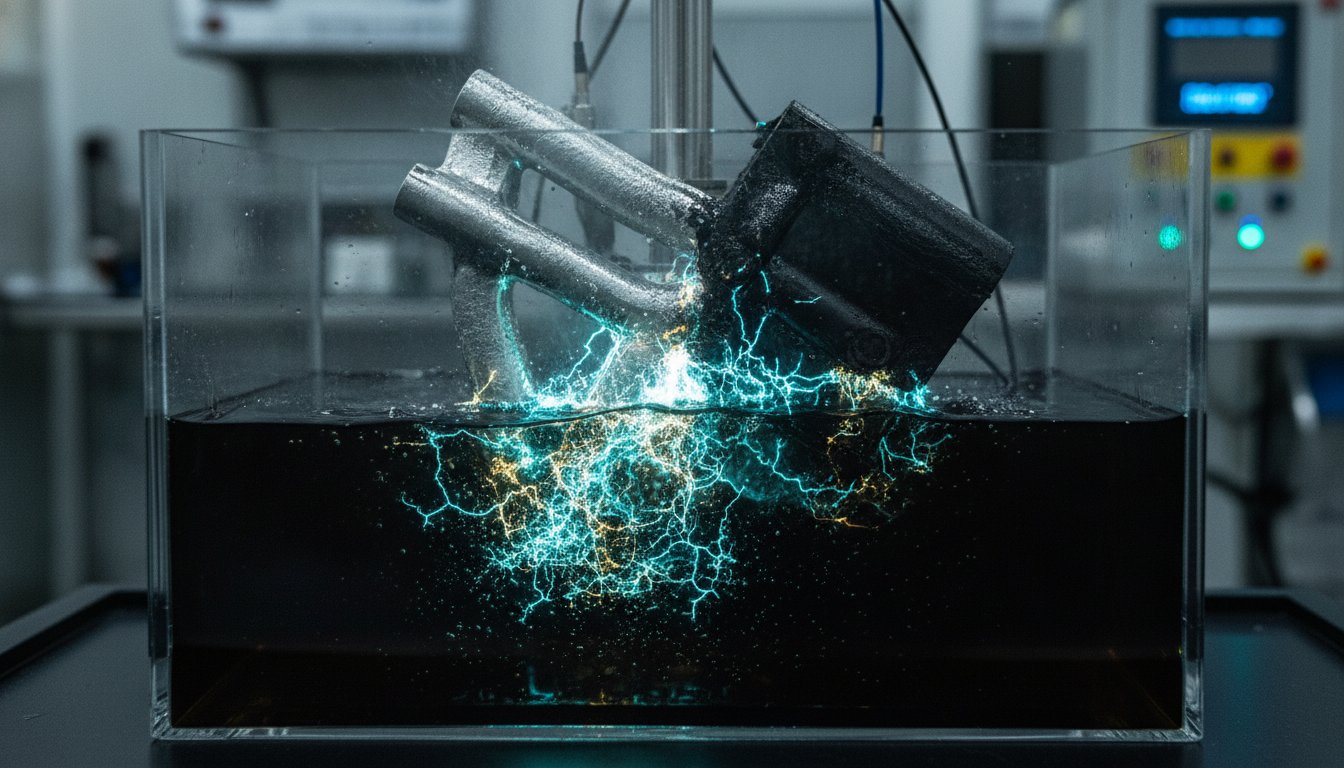
For decades, the industry treated magnesium’s reactivity as an unavoidable tax on lightweighting, but that era of compromise has ended. Implementing an advanced surface treatment for magnesium is no longer just a defensive measure. It’s a strategic engineering choice that transforms a volatile metal into a high-performance ceramic composite. You’ve likely dealt with the frustration of rapid galvanic corrosion or traditional anodizing layers that are simply too brittle or porous for high-stakes applications. Achieving a uniform layer on complex geometries often feels like a losing battle against physics.
This reference helps you master the technical complexities of Plasma Electrolytic Oxidation (PEO) and Micro-Arc Oxidation (MAO) to unlock the full industrial potential of magnesium alloys. You’ll learn how these precision-engineered coatings reach hardness levels up to 600 HV while maintaining strict RoHS compliance. We’ll examine the dielectric and thermal benefits of ceramic-on-magnesium integration, providing a roadmap for identifying scalable solutions that thrive in corrosive environments where traditional methods fail. From aerospace components to semiconductor chambers, this guide bridges the gap between material science and industrial excellence.
Key Takeaways
- Master the electrochemical mechanics of Plasma Electrolytic Oxidation (PEO) to engineer precision ceramic layers with hardness levels reaching up to 600 HV.
- Discover how an advanced surface treatment for magnesium provides a chromium-free path to achieving superior corrosion resistance, reaching up to 1,000 hours in salt spray testing.
- Learn alloy-specific strategies to optimize coating quality for the AZ31, AZ91D, and ZK series by adjusting for specific aluminum and zinc concentrations.
- Evaluate the strategic benefits of integrating PEO Bipolar Power Units and technology license solutions directly into high-precision manufacturing workflows.
- Compare the performance frameworks of ceramic-on-magnesium interfaces against traditional anodizing to ensure structural integrity in high-stress environments.
Navigating the Magnesium Paradox: Why Advanced Surface Treatment is Non-Negotiable
Magnesium offers an exceptional specific strength that makes it indispensable for aerospace and high-performance automotive applications. However, engineers face a persistent Magnesium Paradox. While the metal is incredibly lightweight, its extreme electrochemical vulnerability often leads to rapid degradation. This historical susceptibility to corrosion has limited its adoption in high-stakes environments for decades. Simply using magnesium without an advanced surface treatment for magnesium is no longer a viable engineering strategy in 2026. It’s a risk that most modern manufacturers can’t afford to take.
Traditional chromate and polymer coatings often fail because they act as superficial barriers rather than integrated solutions. In next-generation industrial environments, these coatings delaminate or succumb to galvanic attack when the barrier is even slightly breached. We’ve moved beyond passive protection. Modern engineering standards now demand Strategic Surface Modification, where the surface is chemically transformed rather than just covered. This transition is critical for high-precision sectors like aerospace and semiconductors where component failure isn’t an option. For more in-depth technical analysis on emerging material standards, explore our latest industry insights on our engineering blog.
To better understand the specific challenges of magnesium compared to other lightweight metals, watch this technical overview:
The Limitations of Traditional Anodizing for Magnesium
Standard magnesium oxide layers created through traditional anodizing are inherently porous. These micro-channels allow electrolytes to reach the substrate, triggering sub-surface corrosion that causes the coating to flake off. Legacy chemical conversion coatings also suffer from significant brittleness and poor adhesion, making them unsuitable for components subjected to vibration or thermal cycling. Additionally, the regulatory landscape has shifted. Environmental pressures from REACH and RoHS have effectively phased out hexavalent chromium, forcing a transition to more sustainable, high-performance alternatives. Relying on outdated methods doesn’t just compromise the part; it complicates global compliance.
The Strategic Value of Integrated Ceramic Layers
The shift toward advanced surface treatment for magnesium focuses on in-situ grown ceramic layers. Unlike additive coatings that rely on mechanical bonding, these layers are precision-engineered interfaces that grow directly from the substrate. This integration provides several critical benefits:
- Unmatched Hardness: Ceramic layers typically range from 300 HV to 600 HV, providing superior wear resistance that polymer coatings can’t match.
- Dielectric Strength: High voltage resistance makes them ideal for optoelectronics and semiconductor applications.
- Thermal Stability: The ceramic interface manages heat distribution more effectively than polymer-based barriers.
Ceramic integration represents the future-proof choice for magnesium because it converts a reactive surface into a chemically inert, high-durability asset that meets the rigorous demands of 2026 industrial standards.
The Plasma Electrolytic Oxidation (PEO) Mechanism: Engineering the Ceramic Layer
To resolve the electrochemical vulnerability discussed in the previous section, we must look beyond simple surface barriers. The advanced surface treatment for magnesium known as Plasma Electrolytic Oxidation (PEO), or Micro-Arc Oxidation (MAO), utilizes a sophisticated electrochemical process driven by plasma-assisted micro-discharges. When the magnesium substrate is immersed in an alkaline electrolyte and subjected to high-voltage bipolar power, the dielectric limit of the initial oxide film is exceeded. This triggers thousands of localized, short-lived micro-arcs that melt and re-solidify the metal into a dense, non-porous ceramic structure.
Unlike traditional DC-driven processes, the high-voltage bipolar power supply used in modern PEO setups allows for precise control over the coating’s morphology. By alternating the polarity, we can suppress the formation of large, destructive arcs while promoting a uniform, fine-grained ceramic layer. This process is inherently “self-healing” on complex magnesium geometries. Because the plasma discharges naturally migrate to areas with lower resistance, the coating grows preferentially on thinner or exposed sections. This ensures an integrated layer even on internal threads or intricate cooling fins that traditional spray coatings often miss.
From Metal to Ceramic: The Micro-Arc Oxidation (MAO) Transformation
The transition from a reactive magnesium substrate to a chemically inert ceramic occurs in three distinct stages. First, a rapid sparking stage forms a thin, resistive film across the surface. As voltage increases, the process enters the micro-discharging phase, where localized plasma events reach temperatures high enough to melt the oxide. Finally, arc formation facilitates the conversion of the magnesium substrate into magnesium oxide (MgO) and complex spinel-phase ceramics like MgAl2O4. Achieving this requires extreme precision in current density and frequency control. Mastering these variables is essential for any strategic PEO solutions focused on high-performance industrial components.
Controlling Dielectric and Thermal Properties through Precision Engineering
Engineers can tune PEO parameters to meet specific application requirements for optoelectronics and semiconductor hardware. By adjusting the duty cycle and electrolyte composition, we influence the dielectric breakdown voltage, which is critical for insulating high-voltage components. Similarly, the thickness of the ceramic layer directly impacts the thermal management of the assembly. When designing for high-heat environments, integrating CPO cooling solutions alongside an advanced surface treatment for magnesium ensures optimized heat distribution across lightweight metal housings. This synergy between material science and thermal engineering allows magnesium to replace heavier aluminum alloys in critical cooling applications without compromising on durability.
Comparative Analysis: PEO vs. Traditional Anodizing and Laser Surface Modification
Selecting an advanced surface treatment for magnesium requires a performance-driven framework that prioritizes long-term structural integrity over initial application costs. When we evaluate surface modifications, we must analyze four critical pillars: hardness, adhesion, corrosion resistance, and environmental impact. Traditional chromate-based anodizing is increasingly obsolete, not just because of regulatory pressures like REACH and RoHS, but because it fails to provide the dense, integrated protection required for 2026 engineering standards. While laser surface modification offers precision, it often induces localized thermal stress and struggles to achieve the uniform dielectric properties that Bipolar PEO provides across complex geometries.
The strategic investment in PEO technology is often questioned by those accustomed to cheaper polymer-based coatings. However, polymer barriers only offer passive protection; once the surface is breached, the magnesium substrate remains entirely vulnerable. PEO creates an active ceramic interface that is fundamentally part of the metal itself. This transformation ensures that the component doesn’t just resist wear but remains chemically inert in environments where traditional coatings would delaminate within weeks. For global OEMs, the scalability and energy efficiency of Bipolar PEO systems make it the only logical choice for high-volume, high-stakes manufacturing.
Adhesion and Structural Integrity: The Ceramic Advantage
The primary failure point for most magnesium coatings is the bond between the substrate and the layer. Spray coatings and electroless nickel rely on mechanical interlocking, which is prone to failure under thermal cycling or vibration. In contrast, PEO produces a metallurgical bond. This process creates a unique interfacial transition zone where the magnesium substrate and the ceramic layer are chemically fused. This integrated structure is why PEO layers don’t peel or flake under stress. For a deeper look at these bonding mechanics, you can reference our foundational MAO surface treatment pillar, which details the electrochemical evolution of these interfaces.
Performance Benchmarks: Corrosion Resistance and Wear Durability
Data-driven comparisons highlight the vast performance gap between PEO and legacy treatments. In ASTM B117 salt spray testing, traditional anodizing often fails before the 200-hour mark. Conversely, an advanced surface treatment for magnesium using PEO can extend this resistance to 500 or even 1,000 hours. This durability is matched by significant gains in surface hardness. While standard PEO on magnesium typically reaches 300 to 600 HV, precision-engineered duplex coatings can incorporate particles to push these limits toward 1,000 HV. PEO-treated magnesium components consistently demonstrate a wear life that exceeds that of untreated 6000-series aluminum in abrasive environments. This performance shift allows engineers to swap heavier aluminum parts for lightweight magnesium without sacrificing the component’s operational lifespan.

Alloy-Specific Engineering Strategies: AZ31, AZ91D, and ZK Series Applications
Engineering for magnesium requires an understanding that the substrate is never a monolith. The success of an advanced surface treatment for magnesium depends entirely on how the electrochemical process interacts with specific alloying elements like aluminum, zinc, and zirconium. These elements don’t just dictate mechanical properties; they fundamentally alter the plasma discharge behavior during the PEO process. For instance, high aluminum concentrations in the AZ series promote the formation of spinel phases, whereas zirconium in the ZK series requires tighter frequency control to maintain coating density. Precision in electrolyte chemistry is non-negotiable when transitioning between different alloy families.
Strategic implementation involves tailoring the bipolar power parameters to the specific metallurgical phase distribution of the part. Wrought alloys like AZ31 possess a relatively uniform grain structure, allowing for rapid ceramic growth. In contrast, cast alloys like AZ91D feature a complex magnesium-aluminum eutectic phase that can lead to non-uniform coating thickness if the current density isn’t precision-managed. We don’t just apply a standard coating; we engineer a solution that accounts for the specific chemistry of your substrate to ensure unmatched performance in high-stakes environments.
Optimizing Corrosion Protection for AZ91D and AZ31 Alloys
Achieving AZ91D corrosion protection requires a deep dive into the influence of the beta-phase (Mg17Al12). This phase often acts as a cathode to the alpha-magnesium matrix, accelerating galvanic attack. PEO effectively bridges these phases, creating a continuous ceramic barrier that neutralizes internal galvanic cells. Pre-treatment protocols also differ significantly based on the manufacturing method. Cast parts often require specialized degreasing and desmutting to remove surface segregation, while extruded AZ31 parts benefit from alkaline etching to ensure optimal adhesion of the subsequent ceramic layer.
Advanced Solutions for ZK and AM Series in High-Stress Environments
High-performance sectors like robotics and optoelectronics demand more than just basic protection. For ZK series alloys, which are prized for their high strength-to-weight ratio, PEO significantly improves fatigue life by sealing surface-level micro-cracks that could otherwise act as stress concentrators. In the AM series, often utilized for lidar and optoelectronic housings, managing thermal dissipation is the primary challenge. By strategically selecting PEO parameters, we can balance ceramic thickness with thermal conductivity to prevent heat buildup in sensitive electronic enclosures. Rare-earth magnesium alloys also present unique challenges, requiring specialized alkaline electrolytes to prevent the leaching of expensive alloying elements during the micro-arc phase.
To optimize your specific material performance, explore our specialized AZ91D AZ31 ZK AM Series Surface Treatment solutions designed for next-generation industrial applications.
Strategic Implementation: Integrating Bipolar PEO Solutions into Industrial Workflows
Transitioning from laboratory success to industrial-scale execution requires more than just a chemical recipe. It demands a strategic partnership that provides both the high-precision hardware and the intellectual property necessary for seamless workflow integration. By offering PEO Bipolar Power Units alongside specialized technology license solutions, we enable global OEMs to internalize these advanced capabilities. This shift from a traditional vendor model to a collaborative engineering framework is essential for maintaining quality in high-stakes sectors like aerospace, lidar, and semiconductor manufacturing. It’s about empowering your facility to deliver a superior advanced surface treatment for magnesium without the logistical bottlenecks of external processing.
Bipolar PEO acts as the critical bridge between advanced material R&D and industrial-scale reality. Whether you’re developing lightweight lidar housings or critical semiconductor chamber components, the ability to deploy precision ceramic coatings at scale is a competitive necessity. Integrating these solutions directly into your production line future-proofs your ecosystem against the evolving performance demands of high-tech industries. We don’t just provide a coating; we provide the infrastructure for material excellence.
Precision Hardware: PEO Bipolar Power Units
PEO Bipolar Power Units are the heartbeat of any modern surface modification facility. Unlike standard DC power supplies, these units utilize precision-engineered bipolar pulsing to manage the micro-arc discharges with nanosecond accuracy. This technical necessity ensures the formation of high-density ceramic layers while preventing the thermal damage that often plagues traditional high-voltage methods. For semiconductor chamber coating applications, these systems offer unmatched control over plasma parameters, ensuring that internal surfaces meet the rigorous purity and dielectric standards required for modern wafer processing. These units are built for the rigors of 24/7 industrial environments, providing the reliability that high-volume manufacturers demand.
Scalable Technology Licensing for Next-Generation Manufacturing
Scalability is the final frontier for an advanced surface treatment for magnesium. Many organizations find that shipping critical, high-value components to external vendors introduces unacceptable risks and delays. Technology license solutions remove these barriers by allowing OEMs to integrate PEO directly into their own production lines. This strategic approach offers several key benefits:
- Cost Control: Eliminate the recurring costs and logistical overhead of external surface treatment services.
- IP Security: Keep sensitive component designs and proprietary manufacturing processes within your own secure facility.
- Quality Consistency: Maintain absolute control over PEO parameters to ensure every part meets your internal performance benchmarks.
Integrating these capabilities allows for a more agile R&D cycle and faster time-to-market for new lightweight metal innovations. We invite you to explore the Bipolar PEO blog for the latest R&D updates and technical white papers on how these licensed workflows are evolving to meet 2026 industrial standards.
Future-Proofing Material Performance with Integrated Ceramic Solutions
The transition from passive surface barriers to active ceramic interfaces defines the next era of material science. By mastering the electrochemical nuances of PEO and MAO, engineers can finally leverage magnesium’s lightweight benefits without compromising on durability or regulatory compliance. We’ve examined how a tailored advanced surface treatment for magnesium converts a reactive substrate into a high-hardness, corrosion-resistant asset capable of thriving in the most demanding aerospace and semiconductor environments. Whether you’re optimizing the fatigue life of ZK series components or securing the chemical stability of AZ91D housings, the strategic path forward involves precision-engineered hardware and scalable technology integration.
As a specialized R&D partner, we provide the technical depth and proprietary PEO Bipolar Power Unit technology needed to bring these next-generation solutions to your production line. Our integrated systems are already unlocking potential across the defense and optoelectronics sectors, bridging the gap between laboratory potential and industrial-scale reality. We invite you to Partner with Bipolar PEO for Strategic Magnesium Surface Engineering to secure your position at the forefront of high-precision manufacturing. The future of material performance is integrated, sustainable, and ready for deployment today.
Frequently Asked Questions
Is PEO coating for magnesium alloys better than traditional anodizing?
Yes, PEO is technically superior because it engineers a metallurgical bond rather than a simple mechanical one. Traditional anodizing often results in porous layers that fail under thermal stress or vibration. PEO ceramic layers reach hardness levels of 600 HV, providing a robust interface that legacy chromate treatments simply can’t match. This makes it the strategic standard for 2026 industrial high-stakes applications.
Can advanced surface treatments prevent galvanic corrosion in magnesium?
Yes, it effectively stops the electrochemical circuit. By creating an integrated, non-porous ceramic barrier, an advanced surface treatment for magnesium prevents electrolytes from reaching the reactive substrate. This isolation is critical for assemblies where magnesium is in contact with dissimilar metals, effectively neutralizing the risk of rapid galvanic degradation in marine or high-humidity environments.
How does the PEO process affect the dimensional tolerances of magnesium parts?
PEO growth is highly controlled but requires accounting for both substrate consumption and outward buildup. Generally, the coating grows 50% into the metal and 50% above the original surface. Because we can precision-engineer layers starting at 1μm, it’s possible to maintain the strict dimensional tolerances required for high-precision semiconductor chambers and aerospace housings without extensive post-processing.
What is the difference between MAO and PEO for magnesium alloys?
MAO and PEO are interchangeable terms for the same plasma-assisted electrochemical process. Micro-Arc Oxidation (MAO) is more common in certain research circles, while Plasma Electrolytic Oxidation (PEO) is the standard industrial designation. Both describe the transformation of a magnesium surface into a protective ceramic layer through high-voltage micro-discharges in an alkaline electrolyte.
Is the ceramic layer on magnesium alloys electrically conductive or insulating?
The ceramic layer is an excellent electrical insulator with high dielectric strength. This property is a primary reason why PEO is used for semiconductor chamber coatings and optoelectronic housings. It provides reliable electrical isolation while simultaneously offering thermal stability, preventing current leakage in sensitive electronic assemblies that require precise material performance.
Can Bipolar PEO technology be licensed for in-house industrial use?
Yes, we offer Technology License Solutions specifically for OEMs who need to internalize their supply chain. Licensing allows for the direct integration of an advanced surface treatment for magnesium into your existing manufacturing workflow. This approach ensures IP security, reduces logistical lead times, and maintains total control over coating quality and consistency across global production lines.
How does PEO treatment improve the wear resistance of robotic magnesium components?
PEO improves wear resistance by converting the soft magnesium surface into a hard, ceramic-phase interface. In robotic components, this reduces surface fatigue and prevents galling during high-frequency movements. The resulting layer provides a wear life that often exceeds that of untreated aluminum, allowing for significant weight reduction without sacrificing the component’s operational longevity.
What magnesium alloys are most suitable for advanced ceramic coating?
The AZ91D, AZ31, and ZK series alloys are the most suitable for these treatments. While the process is versatile, high-aluminum alloys like AZ91D benefit from specific spinel-phase formation that enhances corrosion resistance. Tailoring the electrolyte chemistry to the specific alloy series is essential for achieving the highest possible ceramic density and coating uniformity for your application.
