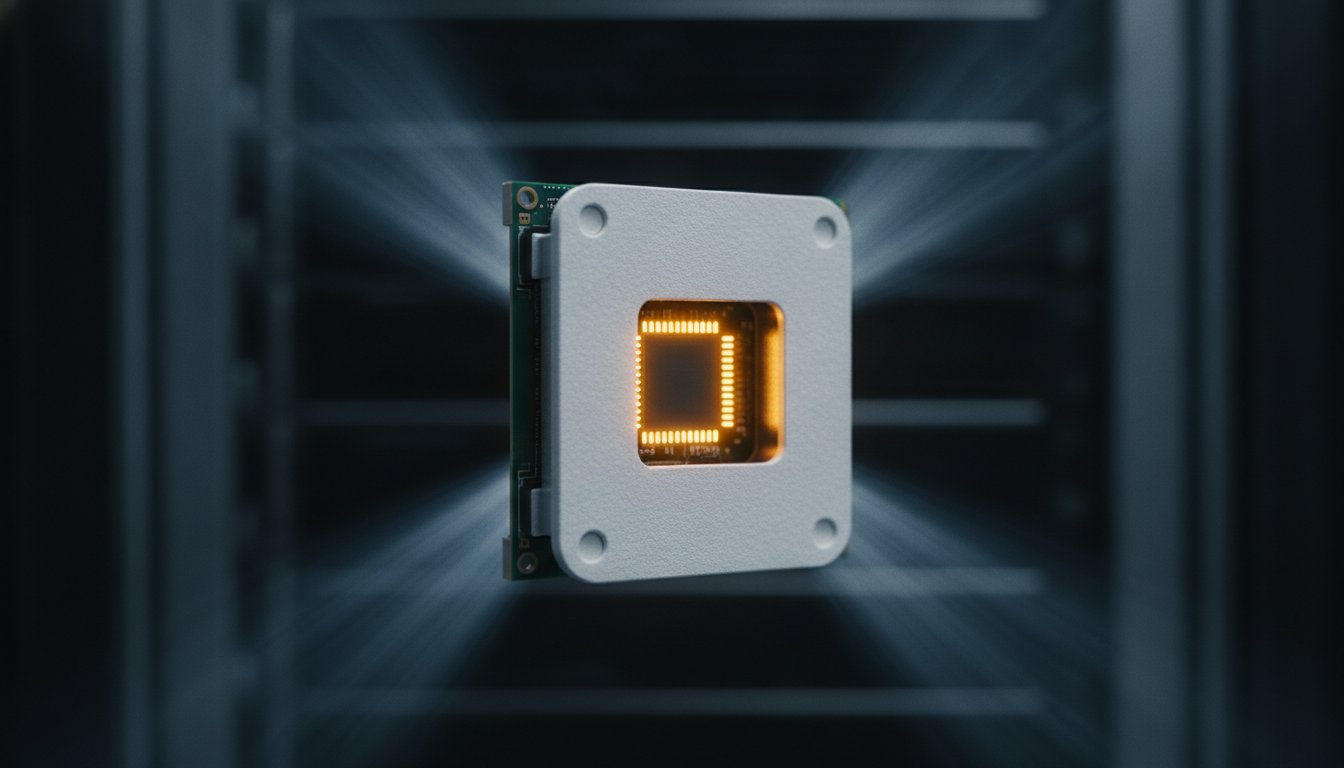
In the high-stakes push toward 3.2T data rates, the primary bottleneck is no longer the optical fiber; it’s the physics of heat. As the industry adopts the OIF’s latest co-packaging standards in 2026, the extreme heat density within these modules has reached a critical point where traditional thermal pastes and bulky heat sinks fail. You’re likely facing the reality that even a minor thermal fluctuation can trigger laser wavelength shifts or signal integrity loss, compromising the very efficiency that CPO technology is meant to deliver. Finding effective CPO cooling solutions isn’t just about moving air anymore. It’s about a strategic material shift that turns the housing itself into a precision-engineered heat spreader.
We’ll show you how advanced PEO ceramic coatings and lightweight magnesium or aluminum alloys are solving these thermal noise challenges. You’ll discover how to maintain laser temperature stability within a strict ±0.1°C range while achieving high dielectric insulation without sacrificing thermal conductivity. This article previews the transition from traditional heavy components to next-generation, high-performance substrates that reduce overall system weight in dense server racks. We’re moving beyond passive cooling into an era of integrated material science where failure isn’t an option for high-stakes AI infrastructure.
Key Takeaways
- Understand why the transition to 1.6T networking in 2026 necessitates a shift toward integrated co-packaged architectures to meet AI-driven thermal demands.
- Learn how magnesium and aluminum alloys provide a strategic advantage by reducing system weight while maximizing thermal conductivity in high-density racks.
- Explore how PEO ceramic coatings act as a dual-role dielectric and thermal bridge, essential for high-performance CPO cooling solutions.
- Discover a framework for integrated heat spreading that maintains critical laser temperature stability within ±0.1°C under extreme heat density.
- Identify the technical benefits of utilizing precision-engineered PEO Bipolar Power Units for the specialized surface treatment of next-generation optoelectronic components.
The Evolution of Co-Packaged Optics (CPO) and the 2026 Thermal Crisis
Co-packaged optics represents the strategic integration of silicon photonics engines directly onto the same substrate as the switching ASIC. This architecture eliminates the energy-heavy electrical traces required by traditional pluggable modules, drastically reducing parasitic capacitance. This fundamental shift relies on the evolution of the optical interconnect, which allows data to move via light rather than electrons across the circuit board. By 2026, the transition to CPO is no longer an option but a necessity for 1.6T networking and generative AI clusters. These systems demand throughput that traditional copper-based interconnects cannot sustain without massive power penalties.
The primary driver for this shift is the massive bandwidth requirement of modern AI workloads. While transitioning from a pluggable transceiver to a CPO in a 1.6T network can reduce link power from 30W to 9W, it creates a concentrated “heat trap.” Energy is no longer spread across the faceplate of a switch; it’s focused in a tiny footprint surrounding the processor. We’ve hit the “Thermal Wall” where traditional copper heat sinks fail to dissipate the extreme heat density, which often exceeds 100W/cm² in next-generation modules. Effective CPO cooling solutions must now address heat at the substrate level to prevent catastrophic failure.
To better understand this concept, watch this helpful video:
Laser stability is the most critical casualty of this thermal crisis. A shift in temperature causes immediate laser wavelength drift, leading to signal integrity loss and increased bit error rates. Maintaining laser stability within a strict ±0.1°C range is mandatory for 1.6T performance. Without precision-engineered CPO cooling solutions, thermal noise destroys the signal-to-noise ratio, rendering the high-speed interconnect useless. This requires a transition from simple air-cooled blocks to integrated heat spreaders that utilize advanced material science.
High-Density AI Clusters and Thermal Throttling
AI clusters in 2026 operate with extreme non-uniform heat distribution. ASICs throttle performance when localized hot spots exceed design limits, creating bottlenecks in training large language models. CPO solves the distance problem by bringing optics closer to the chip, but it concentrates the thermal load. Localized cooling strategies must replace old ambient airflow methods. By reducing the signal-path distance, CPO lowers energy draw, yet the remaining heat must be managed through high-emissivity ceramic coatings that facilitate rapid heat transfer away from the silicon.
The Limitations of Traditional Pluggable Cooling
Pluggable optics reached their physical cooling limit at the 51.2T switch generation. Air cooling cannot move enough volume through a standard faceplate to keep up with the power density of 800G and 1.6T modules. Copper heat spreaders are too bulky and heavy for the tight tolerances of a CPO package, adding unnecessary mass to high-density server racks. The industry is moving toward substrate-level thermal management. This involves using lightweight magnesium or aluminum alloys treated with PEO coatings to create a functional thermal bridge that is both electrically insulating and thermally conductive.
Beyond Active Cooling: The Critical Role of Lightweight Metal Substrates
While active cooling components like liquid cold plates are vital, the passive substrate often dictates the ultimate efficiency of Co-packaged Optics (CPO). Engineers are moving away from heavy copper blocks toward lightweight metal substrates to meet the strict weight and volume constraints of hyperscale AI server racks. This strategic shift isn’t just about weight; it’s about optimizing the entire thermal path from the optical engine to the chassis. Magnesium and aluminum alloys have emerged as the primary candidates for integrated CPO cooling solutions because they offer a superior balance of thermal conductivity and structural integrity.
Using bare lightweight metals in high-stress electronic environments presents significant risks. Without a functional surface layer, these metals can develop galvanic corrosion when in contact with other module components. Additionally, they lack the necessary dielectric properties to prevent electrical interference in the densely packed optical engines. This is why the industry is pivoting toward integrated material strategies. These strategies treat the metal substrate as more than a box; it becomes an active participant in CPO cooling solutions.
The coefficient of thermal expansion (CTE) mismatch represents the difference in how much silicon and its metal substrate expand when heated, which can cause mechanical stress or delamination in co-packaged modules.
Magnesium Alloy Heat Dissipation in CPO Housing
Magnesium alloys like AZ31 and AZ91D are increasingly favored for CPO chassis due to their exceptional specific stiffness and vibration damping properties. In high-frequency environments, magnesium’s ability to dissipate heat while remaining 33% lighter than aluminum is a game changer for massive data center deployments. However, bare magnesium is highly susceptible to corrosion in even moderately humid environments. Protecting these substrates requires advanced surface treatment for magnesium that doesn’t compromise thermal performance. Bipolar PEO provides a strategic partnership for engineering these high-performance surfaces.
Aluminum 6061 vs. 7075 for Thermal Management
Aluminum remains a staple in thermal design, with 6061 and 7075 being the most common aerospace-grade choices. While 6061 offers excellent thermal conductivity (approx. 167 W/m·K), 7075 provides higher mechanical strength for complex internal geometries that require precision machining. The challenge lies in managing the high-stress electronic environment where bare aluminum can oxidize or suffer from electrical leakage. Implementing a Strategic Guide to MAO Surface Treatment Excellence in 2026 ensures these aluminum substrates maintain high dielectric strength while facilitating rapid heat distribution.
PEO Ceramic Coatings: The Dielectric and Thermal Bridge for CPO
Plasma Electrolytic Oxidation (PEO) represents a fundamental advancement in surface engineering for co-packaged optics. Unlike traditional coatings, PEO is a high-voltage electrochemical process that transforms the surface of a lightweight metal substrate into a dense, crystalline ceramic layer. This functional ceramic provides a unique dual-role: it offers the high dielectric strength required to insulate sensitive electronics while maintaining the thermal emissivity needed to move heat away from the engine. As detailed in a comprehensive review of thermal management in CPO, the interface between the optical engine and the substrate is where most thermal bottlenecks occur.
When comparing PEO to traditional hard anodizing, the strategic advantages for CPO cooling solutions become clear. Hard anodizing often results in an amorphous, porous structure that can trap moisture or contaminants, leading to inconsistent dielectric performance. In contrast, the PEO process creates a much harder, more uniform alumina or magnesia-based ceramic. This superior density allows engineers to eliminate bulky thermal interface materials (TIMs) that typically add significant thermal resistance. By mounting components directly onto a thin, precision-engineered PEO layer, the thermal path is shortened, and heat dissipation is maximized.
Dielectric Properties of PEO Coatings for Electronics
In high-power ASIC environments, achieving a high breakdown voltage is non-negotiable. PEO coatings can be tailored to specific thicknesses to provide several kilovolts of insulation within a layer only tens of microns thick. This precision allows for the minimization of parasitic capacitance in high-speed signal paths, which is vital for maintaining signal integrity at 1.6T speeds. The controlled porosity of a PEO layer creates a micro-structured surface that balances bulk thermal resistance with improved mechanical bonding for subsequent packaging layers. This ensures that the dielectric barrier remains stable even under the intense thermal cycling of AI workloads.
Optimizing Thermal Conductivity of PEO Coatings
While ceramics are generally considered insulators, PEO coatings are engineered to act as a high-emissivity “black body” for radiant cooling. This is particularly effective for CPO cooling solutions where radiant heat transfer becomes a significant factor in compact, enclosed housings. PEO-treated magnesium substrates show a marked increase in heat dissipation rates compared to bare metal, largely due to the ceramic’s ability to radiate energy into the surrounding environment more efficiently. Managing the interface between the optical engine and the substrate requires this high-emissivity surface to prevent heat from reflecting back into the silicon. This integrated approach ensures the substrate does more than just hold the chip; it actively pulls heat out of the system.

Strategic Implementation: Optimizing Heat Distribution in AI Clusters
Implementing high-performance CPO cooling solutions requires a transition from component-level thinking to a holistic system architecture. The integration of PEO-treated substrates begins with a defined engineering framework. First, designers select the base alloy based on the specific stiffness and weight requirements of the server rack. Next, PEO parameters are adjusted to reach the target dielectric breakdown voltage while maintaining a thin profile. Finally, the surface is precision-machined to ensure the surface roughness (Ra) in thermal contact areas is minimized, typically below 0.8 μm. This precision is vital to reduce contact resistance at the critical silicon-to-metal interface.
This approach prioritizes ‘Integrated Heat Spreading’ over traditional ‘Component Cooling.’ By treating the entire PEO-coated magnesium chassis as a singular, functional heat spreader, the system distributes localized thermal energy across a much larger surface area. Simulating thermal gradients through Finite Element Analysis (FEA) allows designers to visualize how heat moves through the ceramic-metal boundary. This ensures that the extreme heat density of 1.6T engines doesn’t create localized warping or delamination. For OEMs looking to deploy these systems at scale, Bipolar PEO offers customized CPO surface engineering to meet these rigorous standards.
Overcoming Thermal Throttling in High-Performance Computing
Maintaining laser wavelength stability within the critical ±0.1°C range depends on eliminating the ‘Hot Spot’ effect. Precision-engineered PEO layers act as a thermal buffer, smoothing out the rapid spikes that occur during peak AI training cycles. We see parallel applications for this strategy in high-vacuum semiconductor environments. In those settings, PEO coatings manage heat in chambers where convection cooling is impossible. By reducing the localized heat density, PEO-treated metals prevent the ASIC from reaching its thermal throttling threshold, ensuring consistent throughput for 1.6T engines.
Future-Proofing CPO Hardware for 2026 and Beyond
As the industry looks toward 3.2T and 6.4T roadmaps, the cooling demands will only intensify. Current air-cooled solutions are reaching their physical limit, necessitating a transition to hybrid liquid-PEO cooling systems. In these configurations, the PEO-treated chassis provides a secondary thermal path and a corrosion-resistant barrier against specialized liquid coolants. This level of durability is already a standard in other high-stakes sectors, as seen in PEO Technology for Defense: Advancing Survivability. Strategic planning today ensures that hardware remains compatible with the next generation of photonic engines without requiring a total redesign of the thermal architecture.
Bipolar PEO: Your Strategic R&D Partner for CPO Cooling Solutions
Bipolar PEO, an affiliate of Cirtek Technology Inc, serves as a specialized R&D partner for organizations pushing the boundaries of photonic integration. We don’t just provide surface treatments; we bridge the gap between fundamental material science and high-speed electronics. As the demand for 1.6T and 3.2T engines grows, the need for precision-engineered CPO cooling solutions becomes a matter of system survival. Our role is to act as a high-stakes collaborator, ensuring that the thermal architecture of your next-gen modules is robust enough to handle the localized heat density of modern AI clusters.
To support this transition, we offer custom PEO Bipolar Power Units designed for the precision coating of complex CPO components. These units allow for granular control over the ceramic layer’s growth, ensuring uniform thickness and dielectric consistency across intricate geometries. For companies looking to scale their production, we provide Technology License Solutions. This allows manufacturers to integrate our proprietary PEO processes directly into their in-house CPO manufacturing lines. It’s a strategic move that future-proofs production while maintaining strict control over quality and performance.
Collaborative R&D is at the heart of our operations. We work closely with engineering teams to solve the most complex thermal challenges in optoelectronics, from managing thermal crosstalk to optimizing heat distribution in dense multi-chip modules. This partnership approach ensures that the material strategy is aligned with the electronic design from the earliest stages of development. We don’t just offer a service; we provide an integrated solution that enhances the reliability and performance of high-stakes infrastructure.
Precision Engineering and Quality Standards
Our engineering standards are rooted in the rigorous requirements of the aerospace and semiconductor sectors. We develop custom electrolyte formulations tailored to specific thermal conductivity targets, ensuring that each substrate performs optimally under thermal stress. This level of specialization is essential for maintaining the ±0.1°C laser stability required for high-speed signal integrity. We provide global support for national US-based high-tech manufacturing, acting as a reliable specialist when failure isn’t an option.
Integrated Solutions for Next-Gen Infrastructure
Our expertise extends from semiconductor chamber coatings to integrated CPO cooling housings. By unlocking the potential of lightweight metals like magnesium and aluminum, we help build the foundational infrastructure for the AI era. This isn’t just about surface treatments; it’s about a purposeful progress toward more efficient, sustainable data center hardware. If you’re ready to advance your thermal management strategy, Explore our Technical Resources on CPO Cooling to learn more about our CPO cooling solutions and integrated material science.
Strategic Surface Engineering for the 1.6T Era and Beyond
The transition to co-packaged optics is a fundamental requirement for the next generation of AI infrastructure; however, its success hinges on solving the localized heat density crisis. We’ve established that relying on traditional cooling methods is no longer viable at 1.6T and 3.2T speeds. Effective CPO cooling solutions require an integrated material strategy that combines the high thermal conductivity of lightweight metal substrates with the precision dielectric properties of PEO ceramic coatings. By utilizing magnesium alloys like AZ31 or AZ91D, engineers can achieve significant weight reduction without compromising the thermal path.
As an affiliate of Cirtek Technology Inc, Bipolar PEO provides the specialized expertise and proprietary PEO Bipolar Power Unit technology needed to execute these complex surface treatments. Our focus on precision engineering ensures that your optoelectronic components maintain the temperature stability required for peak performance in high-stakes environments. The future of data center architecture is built on advanced material science; don’t let thermal bottlenecks limit your hardware’s potential. Partner with Bipolar PEO for Advanced CPO Thermal Solutions and secure the reliability of your next-generation networking systems. We’re ready to help you unlock the full capacity of your optical interconnects.
Frequently Asked Questions
What are the primary benefits of CPO cooling solutions compared to pluggable optics?
CPO cooling solutions enable the integration of optical engines directly onto the ASIC substrate, which reduces link power from 30W to 9W in 1.6T networks. This architecture eliminates energy-heavy electrical traces and minimizes parasitic capacitance. While it concentrates heat in a smaller area, it allows for significantly higher bandwidth density. It’s the only viable path for meeting the 2026 energy efficiency targets in AI data centers.
How do PEO coatings improve heat distribution in lightweight metals like magnesium?
PEO coatings transform the surface of magnesium alloys into a crystalline ceramic that acts as a high-emissivity thermal bridge. This layer facilitates radiant cooling, allowing the substrate to behave like a “black body” that radiates heat more effectively than bare metal. It prevents localized hot spots by spreading thermal energy evenly across the chassis. This integrated approach is essential for maintaining the stability of sensitive photonic engines.
Can PEO coatings provide enough dielectric insulation for high-power ASICs?
Yes, PEO coatings achieve the high breakdown voltages required for insulating high-power ASICs within a layer only tens of microns thick. This precision allows engineers to mount components directly onto the substrate, eliminating the need for bulky thermal interface materials. It reduces the total thermal resistance of the package while providing kilovolt-level insulation. It’s a strategic solution for maintaining signal integrity at 1.6T and 3.2T speeds.
Why is magnesium alloy becoming a preferred material for CPO chassis in 2026?
Magnesium alloys like AZ31 and AZ91D are preferred because they’re 33% lighter than aluminum while offering superior specific stiffness. As AI clusters expand, weight constraints in high-density server racks become a critical logistical hurdle. Magnesium’s ability to damp vibrations and dissipate heat makes it the next-gen choice for massive CPO deployments. It’s the ideal substrate for high-performance housings that require both strength and minimal mass.
How does Bipolar PEO’s technology differ from traditional MAO surface treatments?
Bipolar PEO technology uses advanced pulsed current control via proprietary power units to create denser, more uniform ceramic layers than traditional DC-based MAO. This process results in significantly lower porosity and superior dielectric strength. It’s specifically engineered for the tight tolerances of the semiconductor and optoelectronics industries. Our technology provides a more reliable thermal and electrical barrier for high-stakes infrastructure where component failure isn’t an option.
What is the typical thermal conductivity of a PEO-treated aluminum substrate?
A PEO-treated aluminum substrate maintains the high bulk thermal conductivity of the underlying alloy, such as 167 W/m·K for 6061 aluminum. The PEO coating itself is a thin ceramic layer with lower conductivity, but its minimal thickness, usually 10 to 30 microns, ensures it doesn’t act as a thermal bottleneck. This configuration provides a much more efficient thermal path than traditional polymer-based insulators or thick anodized layers.
Is PEO coating compatible with liquid cooling systems in data centers?
PEO coatings are fully compatible with liquid cooling and provide a vital corrosion-resistant barrier against specialized dielectric fluids and coolants. The ceramic layer protects magnesium and aluminum from galvanic corrosion and chemical degradation in hybrid cooling environments. This durability is essential for the 2026 transition from air-cooled to liquid-cooled AI clusters. It ensures the structural and thermal integrity of the CPO housing over long-term deployments.
How can I license Bipolar PEO technology for my own production line?
Organizations can access our technology through Technology License Solutions to integrate our proprietary PEO processes directly into their in-house manufacturing lines. We provide the necessary Bipolar Power Units, electrolyte formulations, and technical support as part of a strategic partnership. This enables OEMs to produce precision-engineered CPO cooling solutions at scale. It’s a future-proofing strategy that gives manufacturers total control over their thermal management quality standards.
